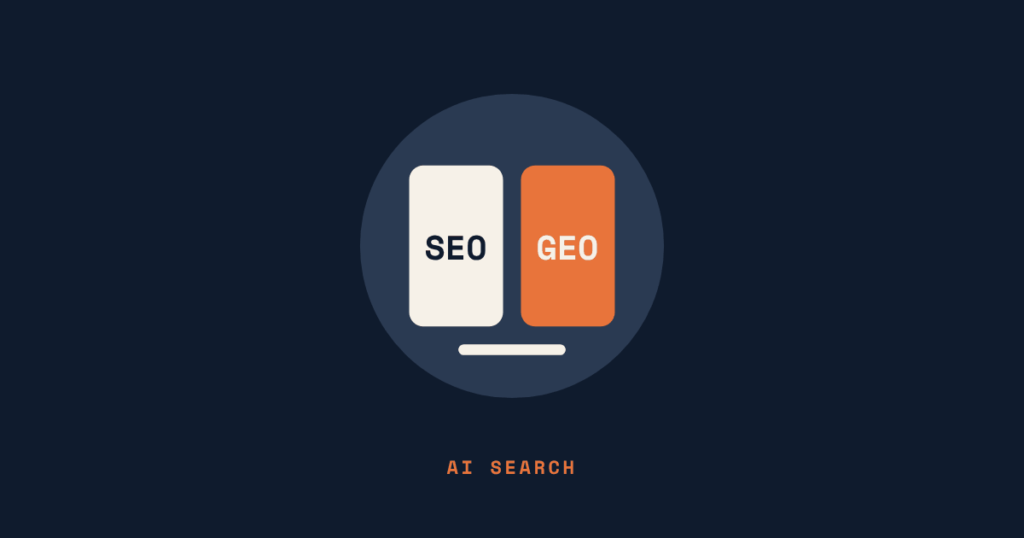
The short answer: no. GEO (generative engine optimisation) builds on SEO rather than replacing it. AI tools such as ChatGPT, Google’s AI Overviews, Gemini and Perplexity still find information by searching the web, so pages that are crawlable, trusted and clearly written remain the starting point. What GEO adds is a focus on being quoted and named in AI answers, not just ranked as a link.
What is GEO?
Generative engine optimisation is the work of making your business easy for AI tools to understand, trust and mention when people ask them questions. You will also see it called AEO (answer engine optimisation) or AI search optimisation. The labels overlap; the goal is the same.
What stays the same
- Technical basics: if search engines cannot crawl and index a page, AI tools that rely on them are unlikely to use it either.
- Helpful content: pages that answer real questions accurately still win.
- Authority: links, mentions and reviews from trusted sources still signal that a business is credible.
- Local signals: for local questions, your Google Business Profile and reviews still matter a great deal (see our Google Maps SEO guide).
What is different
- Answers instead of lists: an AI answer may name only a few businesses, or none, instead of showing ten links.
- Quotable writing: AI tools favour pages that state a clear answer early, in plain language, with facts that can be checked.
- Entity consistency: your business name, services, location and people need to match across your site, profiles and directories, so the AI is confident it is the same business.
- Third-party proof: what others say about you (reviews, directory profiles, press, industry lists) carries more weight than what you say about yourself.
- Measurement: clicks from AI answers are fewer and harder to track, so part of the work is checking whether you are mentioned at all.
What a Dubai business should do now
- Fix the SEO basics first. Speed, indexing, clear page titles and one page per service. Our guide to how SEO works in Dubai covers the basics.
- Answer the questions your buyers ask. Start each page with a direct two-sentence answer, then the detail.
- Make your identity consistent. Same business name, phone, website and description everywhere, plus structured data on your site.
- Earn mentions. Reviews, directory profiles, local press and partnerships give AI tools independent sources to trust.
- Show real expertise. Name the people behind your advice, and share your own data and examples.
- Check AI answers monthly. Ask ChatGPT, Gemini and Perplexity the questions your customers ask, and note who they recommend.
Frequently asked questions
Is SEO dead because of AI?
No. People still use Google heavily, and AI tools still rely on web search to find sources. SEO is changing, but it remains the foundation that GEO is built on.
Do I need a separate GEO agency?
Usually not. GEO and SEO share most of the same work, so it is simpler to have one team handle both, as long as it also tracks AI visibility.
How long does GEO take to work?
Fixing content and consistency can show up in AI answers within weeks to a few months, depending on how often the AI tools refresh their sources. Building third-party mentions takes longer.
Can you guarantee my business appears in ChatGPT?
No one can guarantee that. AI answers change from one question to the next. What can be done is to make your business the clearest, best-supported answer, which raises the chances it is named.